
To enter the forest and become the forest
On nature, silence and the power that is always here.
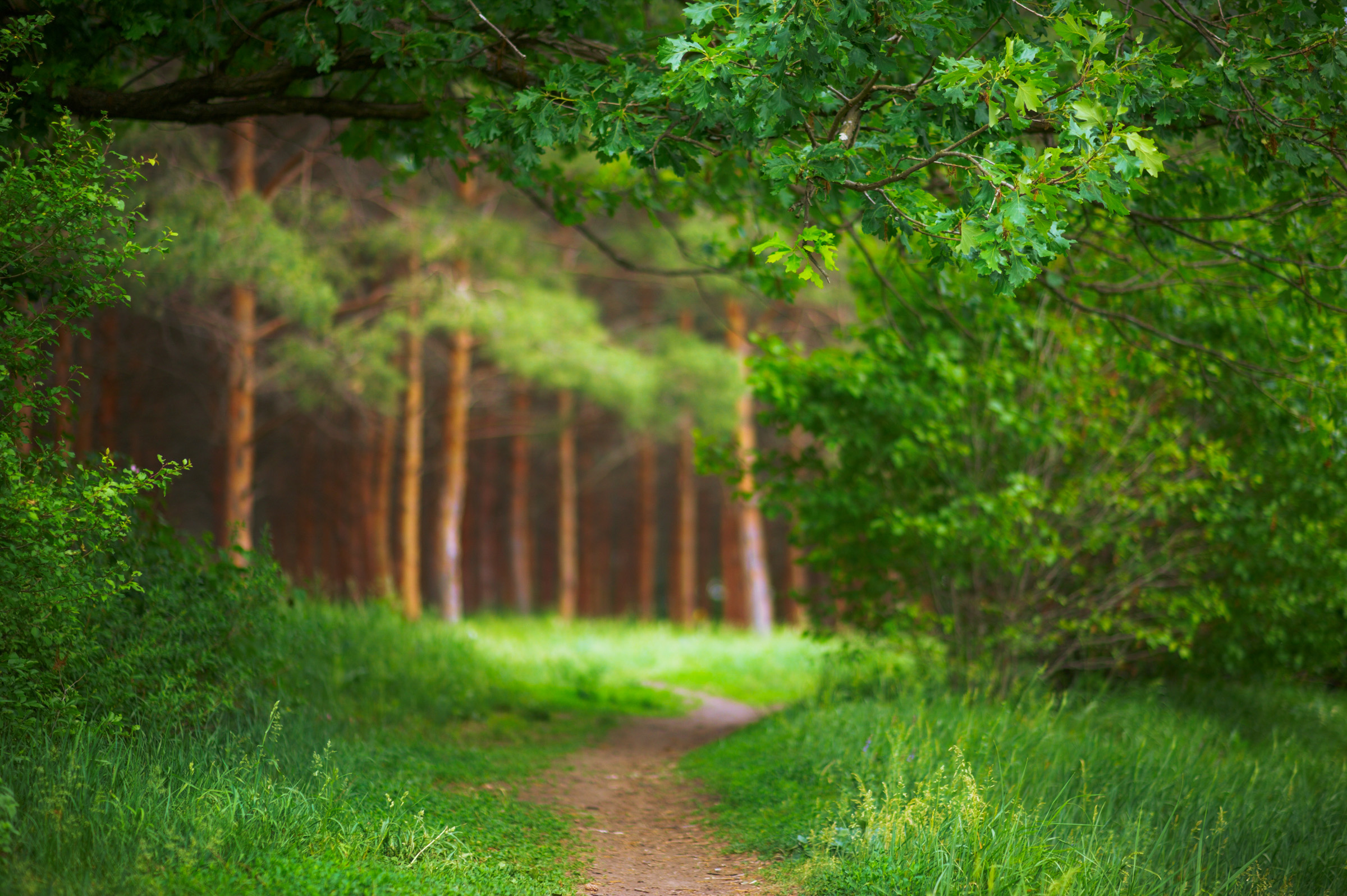
A forest. A path running through it. You are walking along it.
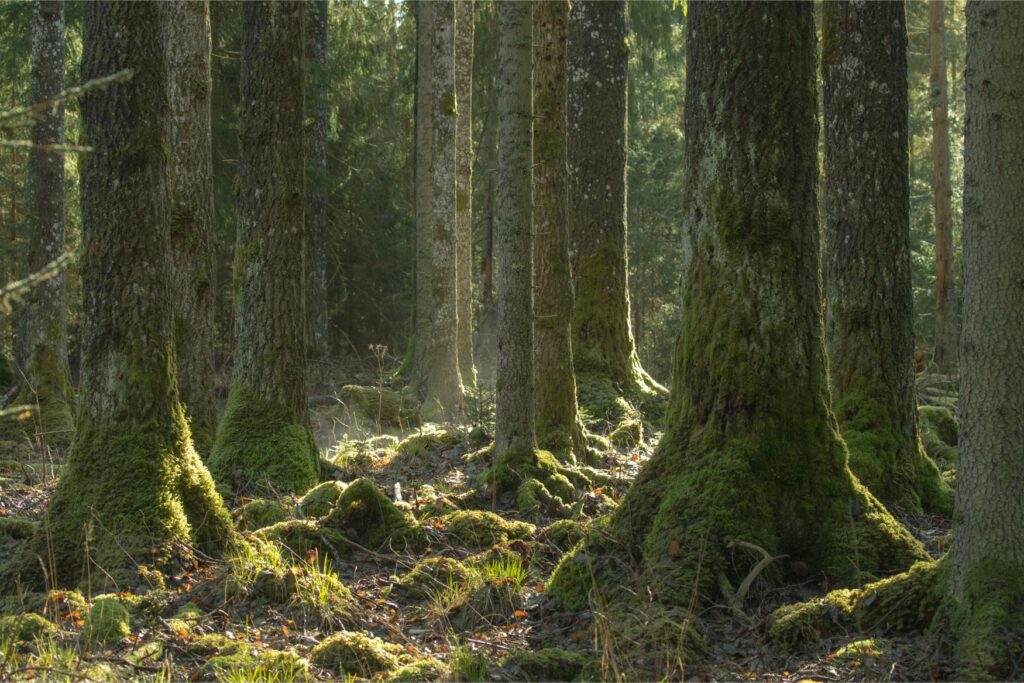
At first you still carry everything with you: unanswered emails, tomorrow’s worries, someone’s word lodged in you like a splinter. But the path winds on, and little by little your ear begins to hear what can no longer be heard in the city. Somewhere far off a woodpecker is hammering, a mouse rustles under the dry grass, the trunks of old spruces creak as the wind brushes their tops. Underfoot there is moss, soft as the palm of the earth. And suddenly, you do not know when, you realise that nothing around you is lifeless. Everything breathes, grows, decays, is born and changes. You no longer watch life from the outside. You swim in it like a salmon swimming in a clear stream.
It lasts a moment, sometimes longer. And the strangest thing is that while it is happening you do not know it. There is no thought “now I am one with the world”. There is no observer writing everything down. Only later, having left that state, do you look back and understand: I was there. Then a deep peace may flood over you, perhaps a light sadness that it has passed. Or perhaps simply a quiet knowing that our ancestors carried in their very bones: nothing stands still. Change is not the world’s mistake. It is its heartbeat.
Where does the power live?
You sit down on the ground. Perhaps under an old oak to which you return year after year. Perhaps on a hillside where for some reason it is always easier to breathe. Perhaps simply where you grew tired of walking. It does not matter where. And a question arises that is hard to escape: the power you feel here, does it live in you, in the trees or in the earth beneath you?
And if it is everywhere, why do you not feel it on the bus? At your desk? While eating? While falling asleep? Even sitting on the toilet?
The last question may make you laugh, but it is worth pausing over. Everything we give to the earth belongs to the same cycle as everything we take from it. Every living creature returns to Žemyna a part of what it received. From that, from fallen leaves, fallen animals and withered grasses, the black soil is born that feeds new lives. Why should we hold sacred only what goes in, and not what comes out? The old worldview did not divide life into “clean” and “unclean”. In it there was only the circle.
There are more questions worth asking yourself in the quiet. Why do I go to the forest? What does it give me? Why do I seek power? Why do I worship the gods, or why do I not?
The answers may differ greatly, and to some these questions will seem quite empty. But there is one grain of insight worth keeping. Power, the gods and nature may be not three different things but one, only seen from different sides. If so, then turning one’s attention to nature is not a rest from spiritual life. It is spiritual life itself.
A path without a recipe
Some sink into silence every day, even several times a day, others once a week. Some return to the same exercise for months on end, others like variety. Some believe that power is born through practice. Others think that practice only opens the door to a power that was always there. Still others say that no practice is needed at all: the power comes by itself when you are ready.
There is no recipe. There is only the wish to go forward and the courage to look for your own path. The responsibility is yours, because it is you who will pick the fruit. On one thing, it seems, everyone agrees: the path is long. Perhaps a whole lifetime. Perhaps longer.
The first step: letting go
Almost every act of concentration begins with relaxation. It is a kind of cleansing, like washing your hands before touching bread. But relaxation can also be an aim in itself. When you let go of tension, space appears in the body, and in that space power can settle.
Lie down, though you can also sit or even stand. Find a quiet place, neither too warm nor too cold, neither too bright nor too dark. Close your eyes. Let everyday thoughts subside and follow just one thing: how the body lets go.
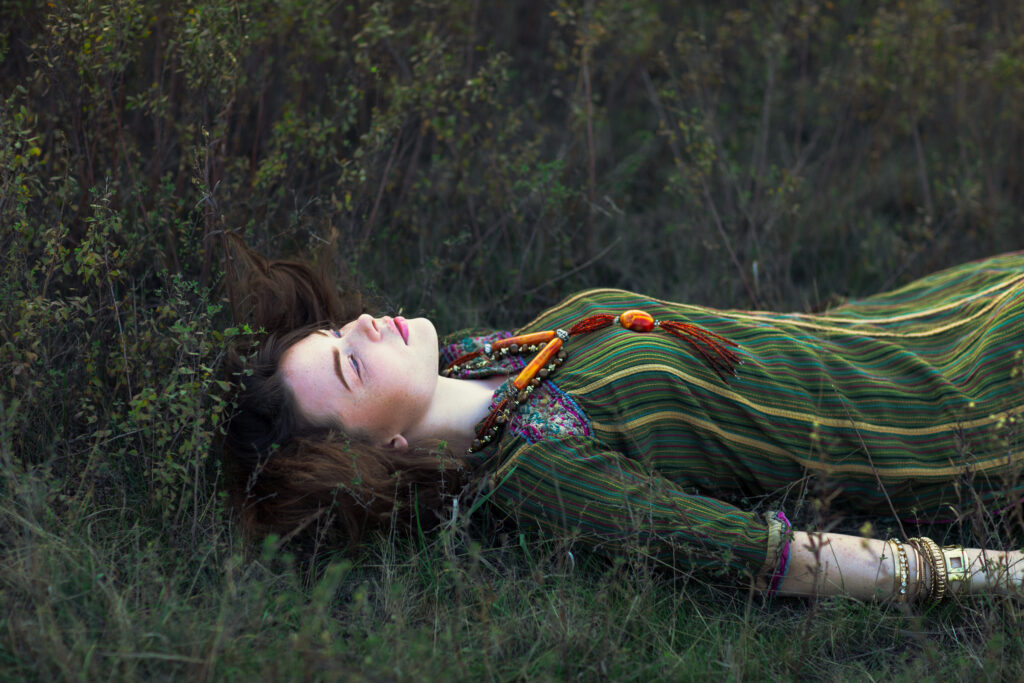
Begin with the feet. They are heavy and loose; you can feel each toe separately. Then the calves, soft and loose. The knees. The thighs. The pelvis. The belly releases and rises and falls by itself with the breath. You do not have to do anything; everything happens of its own accord. The back. The chest. The shoulders drop, as if someone had lifted a burden from them. The hands, each finger. The forearms, elbows, upper arms. The nape. The neck. The face: jaw, cheeks, temples, eyelids. The forehead is cool and smooth. The scalp. And even the mind itself is like a soft, calm mass.
Go over the whole body once more. If tension still lingers anywhere, tense that spot calmly but firmly as you breathe in and release it as you breathe out, as if unclenching a fist.
Then let go of thoughts as well. Do not fight them, because fighting only binds them to you more tightly. Worries, fears and deadlines may well be important out there, beyond the bounds of this hour. But now they can simply drift past like clouds over the forest. You neither chase them nor hold them.
Stay in this state for as long as you wish. At first it may take time to reach it, and you will not succeed every time. Nobody always succeeds. But with time it comes more quickly, even amid noise and haste. Here lies one of the most important lessons: patience with yourself and your weaknesses is as necessary as the will to work on yourself.
To finish, say quietly to yourself: in a moment I will wake, alert and refreshed. Breathe in deeply. Breathe out. Count to three and open your eyes.
Becoming the flame
Light a candle on your home altar or on the windowsill. Relax, as you have already learned, and then look at the flame.
Look calmly. Do not analyse or judge; let there be only the flame. Let its light fill you and its warmth warm you from within. Feel that it is alive. It breathes air as you do, it feeds, it moves. Your attention will wander. When that happens, bring it back gently and without reproach.
A moment may come when the boundary between you and the flame simply dissolves. There is no longer “I” and “fire”; there is only burning.
When concentrating becomes too hard and your thoughts begin to turn in circles that are too wide, stop. Close your eyes for a moment and let them rest. And thank the flame, and Gabija, who has guarded the hearth fire through the ages. Before you begin you may also speak a short invocation; then a simple exercise becomes a small ritual. Leave the candle burning a while longer in a pleasant place until its time comes to go out.
Talking with a flower
The second exercise is just as simple and just as deep. But one rule here is unshakeable: the flower must be alive. It would be strange and quite foreign to our way of seeing the world first to pick a plant and then, as it slowly dies in a vase, to meditate on its life force.
Sit down in front of a flower growing in a meadow or a garden, or by your houseplant. Relax. Open your eyes and look. Do not compare it with others; do not judge its shape, colour or size. Look as if at the only flower in the world. As if it were the only thing that exists at all.
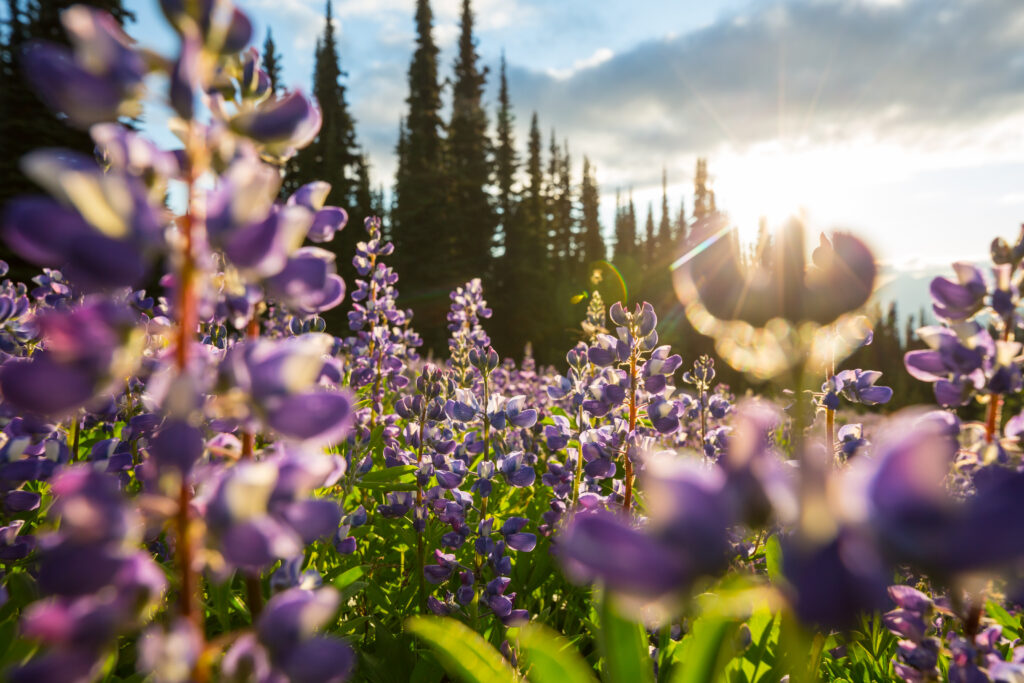
Memories and thoughts will try to cling to your awareness, but at this moment they are not real. Only the flower is real. As you meditate you are talking with it. Can you hear what it answers?
Perhaps you will reach a merging with it, and perhaps not. That does not matter. Only the flower matters.
When you can no longer hold your attention, turn away without regret, close your eyes and let your thoughts drift freely. Thank the flower. Thank yourself. And, if you wish, thank the power that for you is growth and blossoming, Žemyna, from whom everything sprouts.
Why not a road sign?
You have probably noticed that both exercises are built the same way. Only what you look at changes. In just the same way you can concentrate on the wind on your skin, a drifting cloud, a hill on the horizon or the river water you are wading through. You do not even need to see the object of meditation with your eyes.
Does it have to come from nature? Not necessarily. There is a story about a man who, bored at a bus stop, began looking at a prohibition road sign and suddenly experienced real ecstasy. Power, it seems, truly is everywhere.
And yet man-made things usually tell us little, apart from what they are for. They have no purpose in themselves; they are only tools. But fire, plants, animals, wind, water, clouds and landscapes exist in their own right. Each has its own story that no human will ever read to the end. That is why, even if the technique is the same, each such meditation opens up an entirely different world.
Here lies a quiet but painful question for our times. Does modern culture not teach us to stop seeing what exists for its own sake? An oak that adds nothing to gross domestic product is considered worthless until it is felled. A bog is worthless until it is drained, and a river until it is dammed. Whatever has no “purpose” has no value in our eyes either. But our ancestors saw differently. A sacred grove was sacred not because it was useful, but because it was.
Where this point leads
Concentration is only the beginning. When imagination and creative power are added to it, meditation can go deeper: into symbols, myths, images from dreams and the subconscious, into places where spirit meets the tangible world. Then one can learn to send roots into the earth like a tree. One can become a stone, calm and thousands of years old. One can greet the Sun in the morning as our elders did, bowing to her as she rises.
But all that comes later. Today a small thing is enough. Go out into the forest, sit down on the moss and let go. Let the world remember for a moment that you are part of it.