
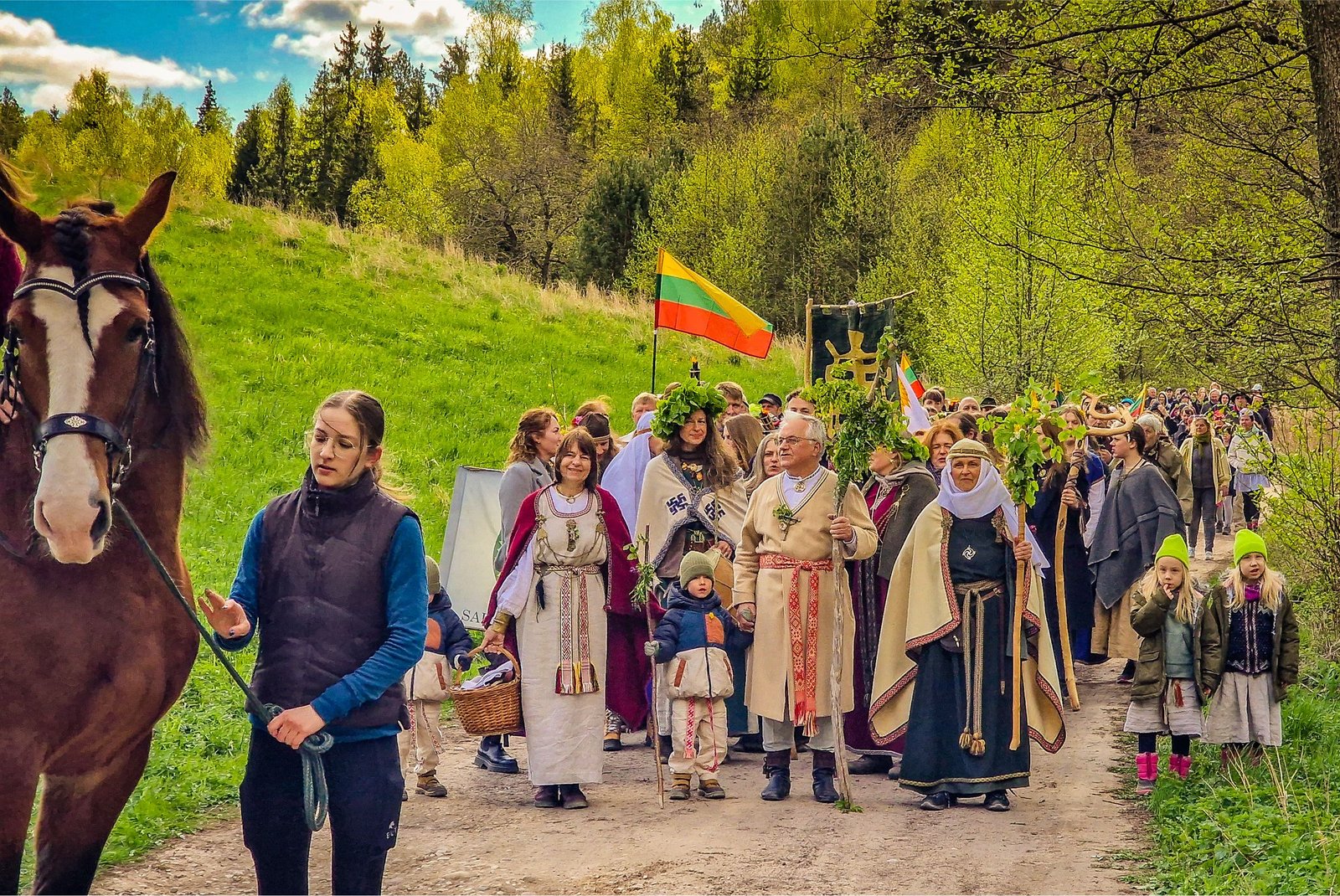
Modern paganism in Lithuania: a living faith, community and responsibility to the Earth
Only a few decades ago paganism in Lithuania was mostly spoken of as the distant past: the faith of our ancestors, surviving in historical sources, folklore and old songs. Today that view is changing. More and more people see the Baltic worldview not only as cultural heritage but also as a living spiritual path that can help people today restore their bond with Nature, their ancestors and their community.
This revival does not follow a single fixed model. Some people discover Romuva and the tradition of the ancestral faith; others visit ancient sacred sites and study folklore, herbalism, mythology or rites. Still others call their path a religion of nature or simply a native worldview. Yet many of them are united by the same longing: not to believe blindly in what they are told, but to experience the sacredness of the world for themselves.
A faith that springs from experience
Many modern pagans grew up in a Christian environment. In Lithuania this often means sacraments received in childhood, family celebrations and religious customs that were passed on more out of tradition than conscious choice.
But not everyone found their place in that religious narrative. Some had questions for which the usual answers were not enough. Others were drawn to Lithuanian mythology, hillforts, sacred hills (alkakalniai), old songs or stories about sacred trees and springs. Still others simply felt that in the forest, by a fire or under a starry sky they experienced more than in an enclosed sanctuary.
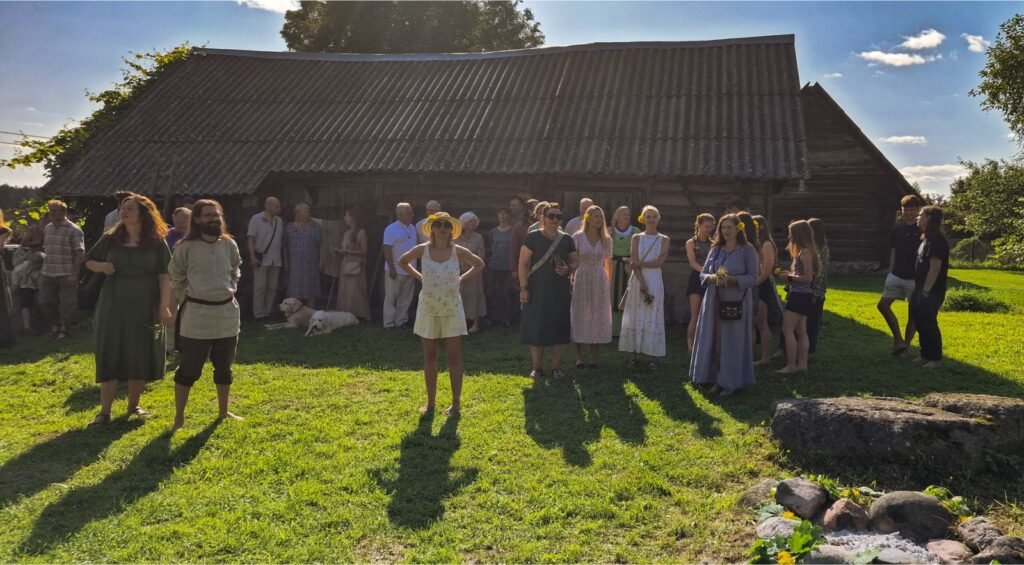
Such a spiritual path often begins not with a clearly formulated belief but with searching. Books are read, folklore is studied, ancient sacred sites are visited, people take part in festivals and community gatherings. In time, what at first seemed merely an interest in history can become a personal practice.
In the native faith what matters is not only what a person is told to accept as true. Far more significant is their own experience: a lived bond with the ancestors, the deities, the spirit of a place and the turning points of the wheel of the year. It is a faith a person not only professes but experiences.
Nature as a space of life and sacredness
The pagan worldview dissolves the strict boundary between everyday and sacred life. Faith is not left behind at the place of the rite once the festival is over. It unfolds in one’s relationship with the land, food, work, other people and the surrounding world.
In such a relationship the forest is not just a pleasant place to relax or a timber plantation. A river is not merely flowing water, nor a stone a mute geological body. Everything that exists has its own life, history and place in the common order of the world.
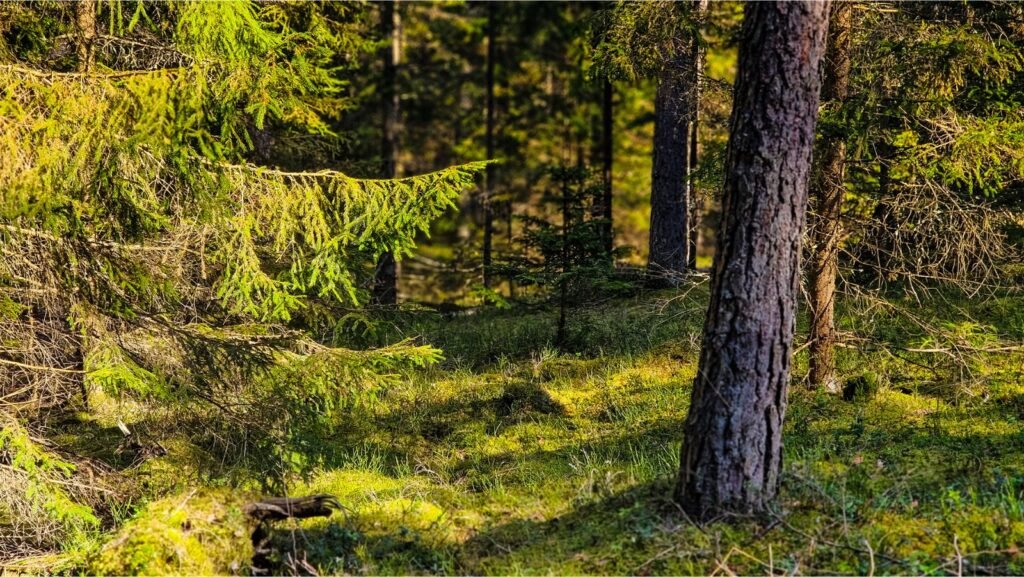
You can feel this difference even when travelling from the city to the forest. The city has its own rhythm, memory and spirit. The forest has another. An old oak wood greets a person in one way; a bog, a hillfort, a lake shore or an ancestral cemetery in another. Each place has its own mood, which can be felt only by slowing down and listening.
For our ancestors such a relationship was no abstract philosophy. People’s lives depended directly on the fertility of the soil, on water, forest, livestock, the sun and the changing seasons. So respect for Žemyna, Gabija, Perkūnas or other divine powers was at the same time respect for the world that sustains life.
People today have to discover this state anew.
Rites, the wheel of the year and remembering the ancestors
Pagan practice can be very varied. Some people take part in community calendar festivals; others perform personal rites, honour their ancestors, kindle a fire, sing sutartinės or visit sacred places.
What matters most here is not the outward form of the rite. Fire, a wreath, offered bread or a hymn are meaningful to the extent that they help a person connect with what they express.
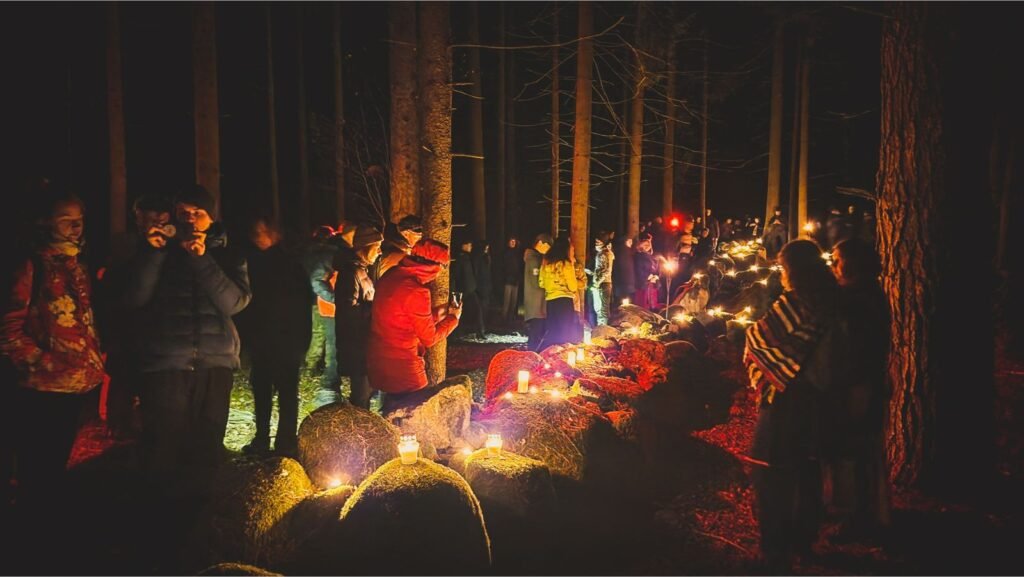
The festivals of the wheel of the year remind us that human life does not unfold apart from Nature. Life awakening in spring, the fullness of summer, the autumn harvest and the stillness of winter are not merely changes in the weather. They are transformations that embrace the whole living world, and we take part in them too.
No less important is honouring the ancestors. It lets us understand ourselves not as separate individuals dependent on nothing, but as part of a long chain of generations. From our ancestors we inherit not only names or land but also language, songs, stories, ways of understanding the world and the responsibility to carry on what is valuable.
From lone seekers to community
In recent decades the opportunities to get to know paganism have grown enormously. In the past a person interested in the old beliefs had to search long for rare publications, like-minded people or reliable information. Today there are digital libraries, scholarly publications, recorded lectures, community websites and international contacts.
The internet helped people realise that they are not alone. But a real community is not born on social networks alone. It is built by meeting at festivals, on hikes, at volunteer work days, in camps, at lectures and around a shared fire.
As in every young and growing movement, there is no shortage of differing opinions in pagan communities. Some pay more attention to historical accuracy, others to living spiritual experience. For some the rites matter most, for others culture, environmental protection or public work. Sometimes these differences cause tension, but they also show that the tradition is not a fossilised museum exhibit.
A living community learns to confer, to accept differences and to look for what unites people. It grows not when everyone becomes the same, but when they learn to act together.
Paganism and nature conservation: two sides of the same responsibility
If the Earth is held to be alive and sacred, environmental protection cannot be an activity separate from faith. It is impossible to honour Žemyna in rites and in everyday life to watch indifferently as soil is exhausted, rivers polluted, bogs drained or forests recklessly felled.
The human being is not the master of the world for whose use everything else was created. We are one of the many parts of the community of life. So the right to use nature’s gifts must always be accompanied by the duty to maintain balance.
Modern paganism can give conservation what scientific arguments alone sometimes lack: an emotional and spiritual bond with a particular place. Science can calculate how many species are lost when an old-growth forest is felled, but a worldview lets us feel that the destruction of such a forest is more than a statistical or economic loss.
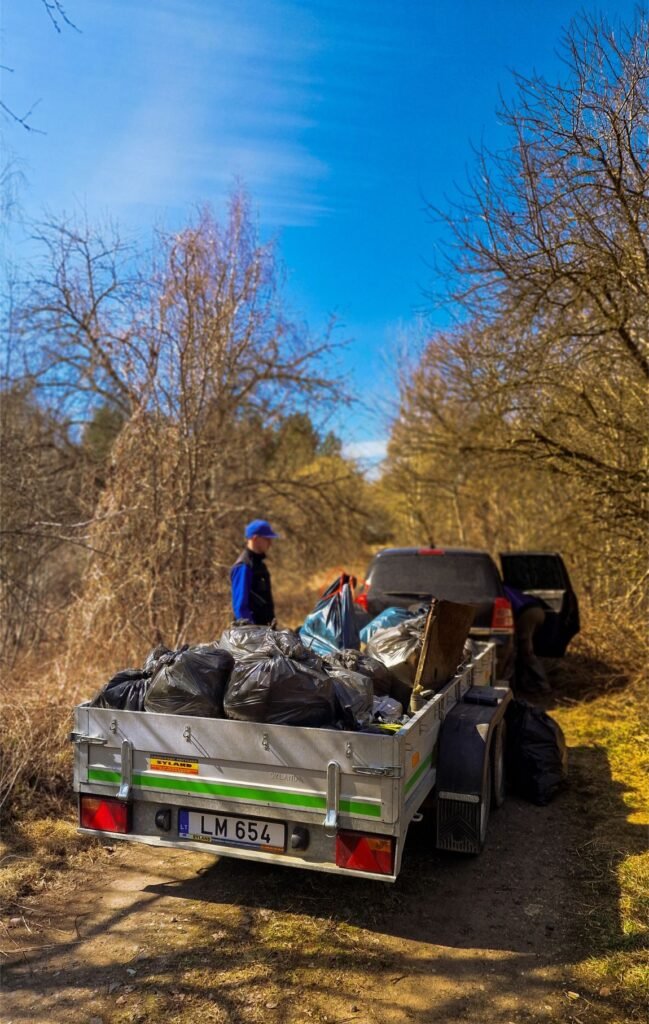
In Lithuania this responsibility is especially important. The hillforts, sacred hills, sacred springs, mythological stones, old trees and forests that survive in our landscape are at once natural and cultural heritage. To protect them is to defend not only biodiversity but also the memory of the nation.
So pagan activity need not be expressed in rites alone. It can be tidying sacred sites, litter-picking work days, defending old trees and forests, public education, nurturing traditional songs or helping local communities. Faith comes alive when it shows itself in deeds.
Visibility: a necessary condition for recognition by society
Some people in Lithuania still tend to keep quiet about their pagan identity. Some fear ridicule, others do not want conflicts in the family or at work, and some regard their spiritual path as an entirely personal matter.
But a community that society does not see can hardly expect understanding and equal recognition. That is why public festivals, lectures, articles, conversations in the media and open community events matter more than it may seem.
They make it possible to show that modern paganism is neither a game in historical costumes nor hostility towards other religions. It is a living worldview with its own values, communities and understanding of responsibility.
Publicity helps break down stereotypes. People begin to see not a hazy image of “the pagan” but real members of communities: families, teachers, artists, craftspeople, conservationists and other members of society. In time, social familiarity also builds respect for their rights.
A living tradition looks to the future
Lithuanian paganism need not be merely an attempt to reconstruct the past exactly. A large part of the old religion was lost, so today the tradition is being restored from folklore, songs, language, archaeology, historical testimony and living customs. At the same time it is inevitably being created anew, in answer to the questions of people today.
That is not a weakness. Every living tradition changes. Its essence endures not because it freezes in one historical form, but because it is able to pass on its most important values to new generations.
The future of modern paganism in Lithuania will depend on whether communities manage to reconcile respect for the legacy of the ancestors with openness to today’s world. Will rites become a source of everyday responsibility? Will reverence for Nature turn into real work to protect it? Will people walking different paths learn to act together?
Paganism remains alive as long as it helps people feel the world not as a collection of resources but as the shared home of life. Its strength lies in a simple truth that is especially needed today: the human being is not separate from the Earth.
We are part of her. So when we protect forests, waters, animals, sacred sites and the memory of our ancestors, we are not protecting something foreign: we are protecting the world to which we belong.
Photographs and text by Donatas Greičiūnas